Hurricane season runs from June 1 through November 30, and for homeowners along Florida’s Space Coast, that’s six months of staying informed and staying ready. The goal of this checklist isn’t to alarm you — it’s to help you feel genuinely prepared, so you can focus on the things that matter when a storm is in the forecast.
Work through this list now, while the weather is calm and hardware stores are fully stocked.
1. Emergency Supplies and Documentation
Start with the basics that apply to every household, regardless of your home’s construction or age.
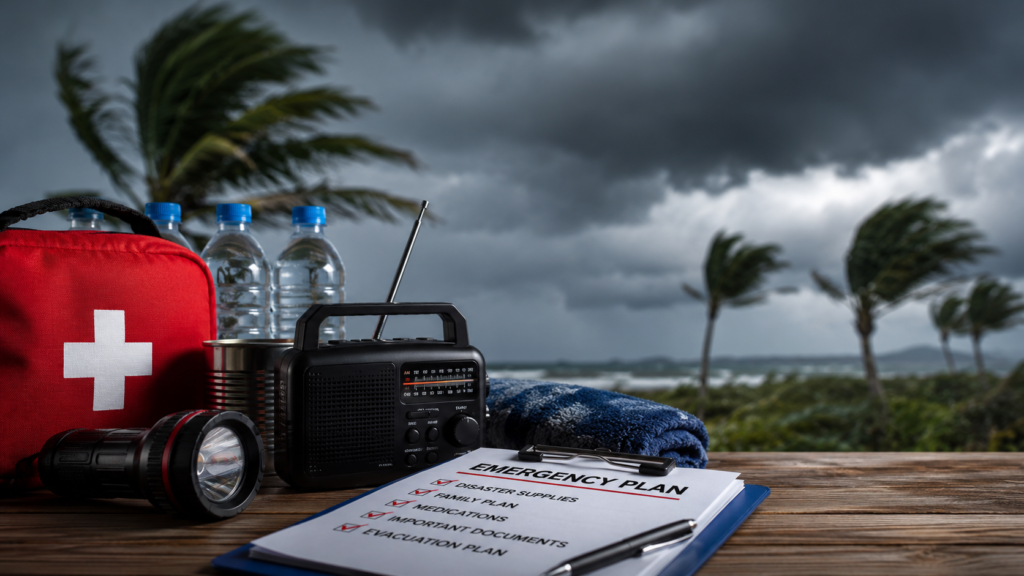
– Water: at least one gallon per person per day for a minimum of three days
– Non-perishable food and a manual can opener
– Flashlights, batteries, and a battery-powered or hand-crank radio
– First aid kit and a supply of any prescription medications
– Copies of important documents in a waterproof container: insurance policies, IDs, medical records, and a home inventory
– Charged portable power bank for phones
– Cash in small bills (ATMs and card readers go down)
If you haven’t photographed or video-documented the interior and exterior of your home for insurance purposes, do it this week and store the files somewhere off-site or in the cloud.
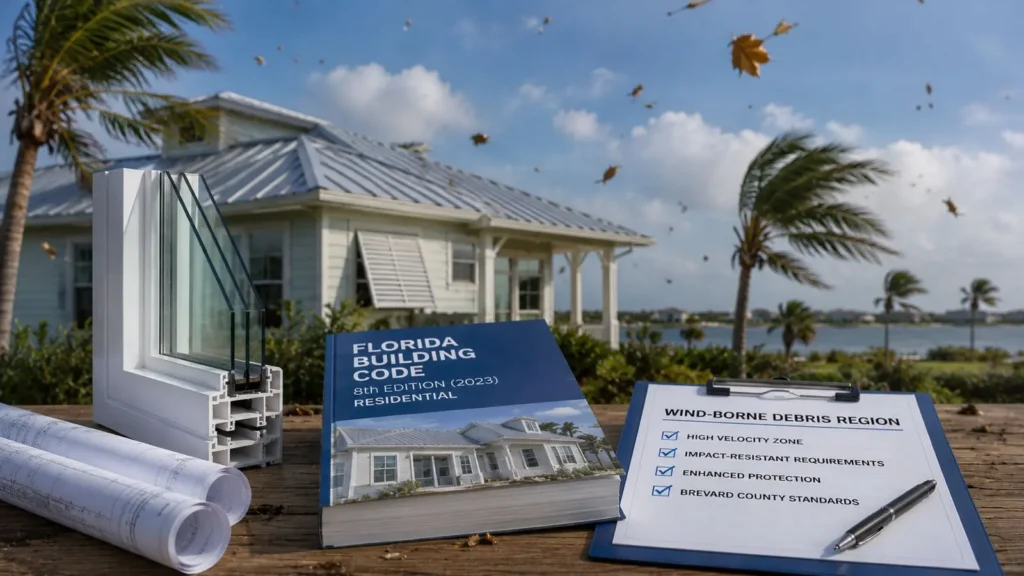
2. Shutters, Windows, and Doors
Knowing what protection you have — and whether it’s functional — is one of the most practical things you can do before a named storm forms.
– Locate all storm shutters, accordion panels, or plywood cuts. Test that they still fit and that all hardware is accounted for.
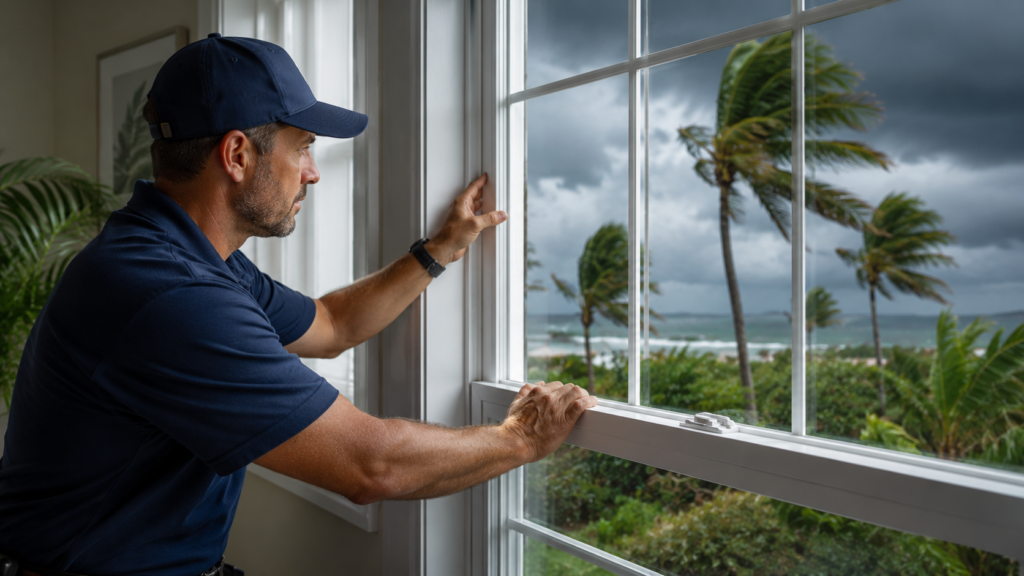
– Walk each window and exterior door. Look for cracked or dried-out weatherstripping, gaps at the frame, or hardware that feels loose.
– Check sliding glass doors: the locking mechanism should engage smoothly, and the track should be clear of debris.
– If you have impact-rated windows or doors, verify they haven’t been damaged or compromised since installation.
– Note any openings that concern you — and consider scheduling a professional assessment before the season gets active.
If your home still relies on plywood or older panel systems, it’s worth understanding what your options are. A professional can walk through your specific openings and give you an honest picture of where you stand.
3. Roof, Exterior, and Yard
Wind and water damage often start at the edges of a home. A simple walkthrough can catch issues before they become expensive.
– Inspect your roof from the ground: look for missing, lifted, or curling shingles
– Check soffits and fascia for any sections that appear loose or damaged
– Clear gutters and downspouts so water can move away from the foundation
– Trim trees and large shrubs, particularly any branches that hang over the roof or close to windows
– Identify outdoor furniture, pots, decorations, and equipment that would need to be brought inside or secured
– Know where your utility shutoffs are located
A well-maintained exterior doesn’t just reduce storm risk — it also helps with insurance documentation and home value.
—
If you’d like a printed version of this checklist, download the free PDF at ikonflorida.com. Share it with neighbors, post it in your local Brevard Facebook group, or pin it on Nextdoor — the more prepared your street is, the better off everyone is.
IKON Windows and Doors serves homeowners throughout Brevard County, including Melbourne, Satellite Beach, and Indian Harbour Beach. If you’d like a free, no-obligation assessment of your home’s window and door protection, we’re happy to schedule a visit at your convenience.